
The best epoxy flooring for warehouses depends on loads, chemicals and downtime. How to pick the right industrial system for your Sunshine Coast site.
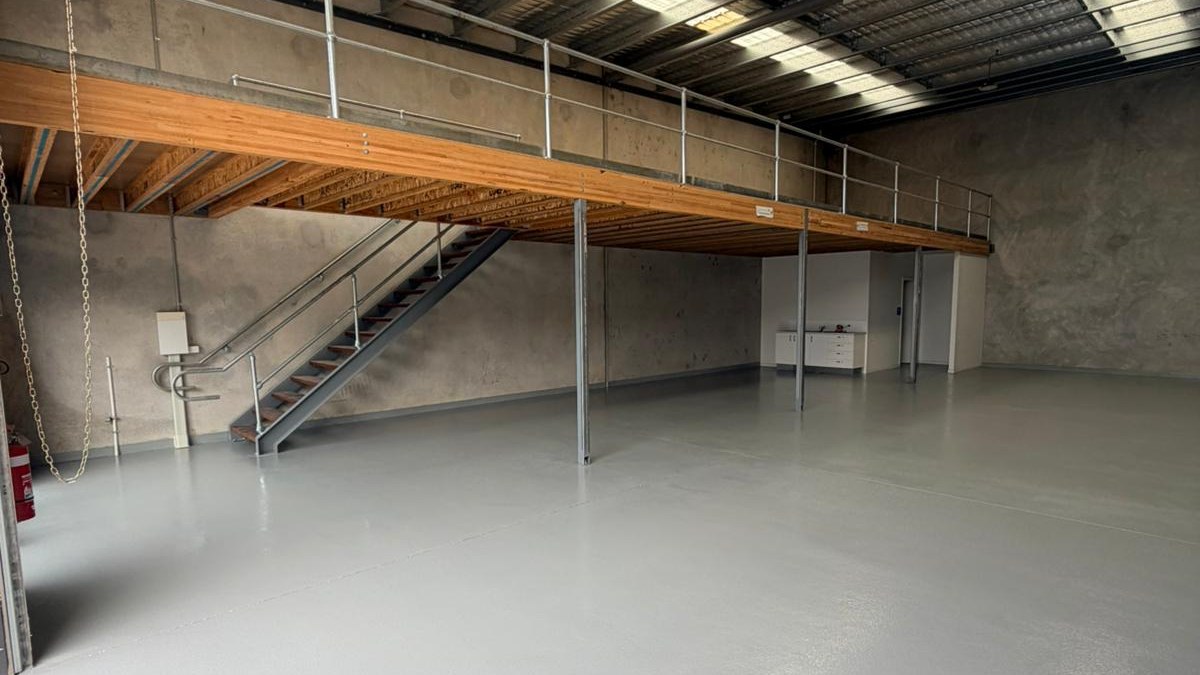
The best epoxy flooring for warehouses is the one that matches how your warehouse actually runs: the forklifts, the pallets, the chemicals, the washdowns and how long you can afford to shut down. There's no single winner, but there are a few systems that suit most sites, and a few mistakes that cost operators money. Here's how to choose, based on what we see across warehouses and distribution centres from the Sunshine Coast down to Brisbane.
For most warehouses, the best epoxy flooring is a build-up system that's thicker than a simple roll-on coat, finished with a hard-wearing topcoat chosen for the traffic. Quartz-filled systems are the tough option for heavy, constant loads. Flake systems give a durable surface that hides wear and is a good fit for showrooms and mixed-use sites. A single-colour coat suits lighter-duty storage areas where cost matters most.
The best epoxy flooring for warehouses isn't always the thickest. A thin floor in a lightly used store room is fine. A thick floor in a busy dock is not optional. What matters is matching the system to the load.
A warehouse floor takes more punishment than most people realise. Forklifts concentrate weight onto small wheels, which creates point loads that can crack weak coatings. Pallet jacks, dropped loads and steel-wheeled trolleys scratch and chip the surface. Spills of oil, battery acid, cleaning chemicals and coolant can attack a floor that isn't chemical resistant. Industrial epoxy flooring is designed for exactly this, with a build and topcoat chosen for impact, abrasion and chemical exposure rather than looks.
Condition of the slab matters just as much. Old, oily or already-coated concrete has to be properly ground back before any new coating goes on, or it will lift. That's the step cheaper quotes tend to leave out.
Most warehouses don't need one floor everywhere. Loading docks and forklift aisles usually get the heaviest system. Pick and pack areas with foot traffic and trolleys suit a medium-duty build. Offices, amenities and showroom sections can use flake or single colour for a cleaner look.
Colour zoning is one of the best bonuses of an epoxy floor. Walkways, pedestrian crossings, machine exclusion zones and storage bays can be marked into the floor itself, rather than painted on top, so they last as long as the coating does. If you're sorting out the difference between commercial and industrial specs, our guide to commercial and industrial epoxy flooring explains where the line sits.
A smooth, glossy epoxy floor can become slippery when wet or oily. In a warehouse, that's a safety issue. The best epoxy flooring for warehouses includes an anti-slip additive in the topcoat, particularly around docks, wash bays, chilled areas and anywhere vehicles bring in water. Our guide on whether flake flooring is slippery goes into how grip is controlled.
Some warehouses have extra demands. Cold stores see temperature swings and condensation. Food storage and handling may need easy-clean, hygienic surfaces. Automotive and mechanical warehouses deal with oils and fuels. Each of these can be handled with epoxy, but the system has to be specified for it. Tell your installer up front about anything unusual, from temperature extremes to harsh cleaning chemicals.
For a warehouse, every day the floor is out of action costs money. Conventional epoxy can take several days between coats. We use polyaspartic coatings and our FastFlake system, which cure far faster, so we can cover hundreds of square metres in a day and get your floor back in use quickly. Talk to your installer early about how a large job can be sequenced so part of the site stays operating.
Cost comes down to a few things: the floor area, the condition of the slab, how much grinding and crack repair is needed, the system you choose and the topcoat. A bigger area usually brings the price per square metre down. A slab with old coatings, oil contamination or heavy damage takes more prep. When you're comparing quotes for the best epoxy flooring for warehouses, check that each one covers the same prep, the same system and the same warranty, or you'll be comparing different jobs.
Ask what system is being proposed and why it suits your loads. Ask how the slab will be prepared and how moisture is tested. Ask about the topcoat, the grip additive and chemical resistance. Ask how long the floor will be out of action and what the warranty covers. The best epoxy flooring for warehouses comes from an installer who can answer all of these plainly.
Epoxy Flooring Projects has installed commercial and industrial floors across South East Queensland for over 35 years, backed by a lifetime adhesion warranty. Most smaller jobs can be quoted from clear photos and the floor dimensions, and larger sites or anything out of the ordinary may warrant a site visit first. Moisture is always tested on site on the day work starts. See our epoxy flooring for warehouses page or call 0494 370 406 for a free quote.