
Is epoxy flake flooring slippery? What actually decides the grip of a flake floor, and what to ask for in wet areas, garages and shopfronts.
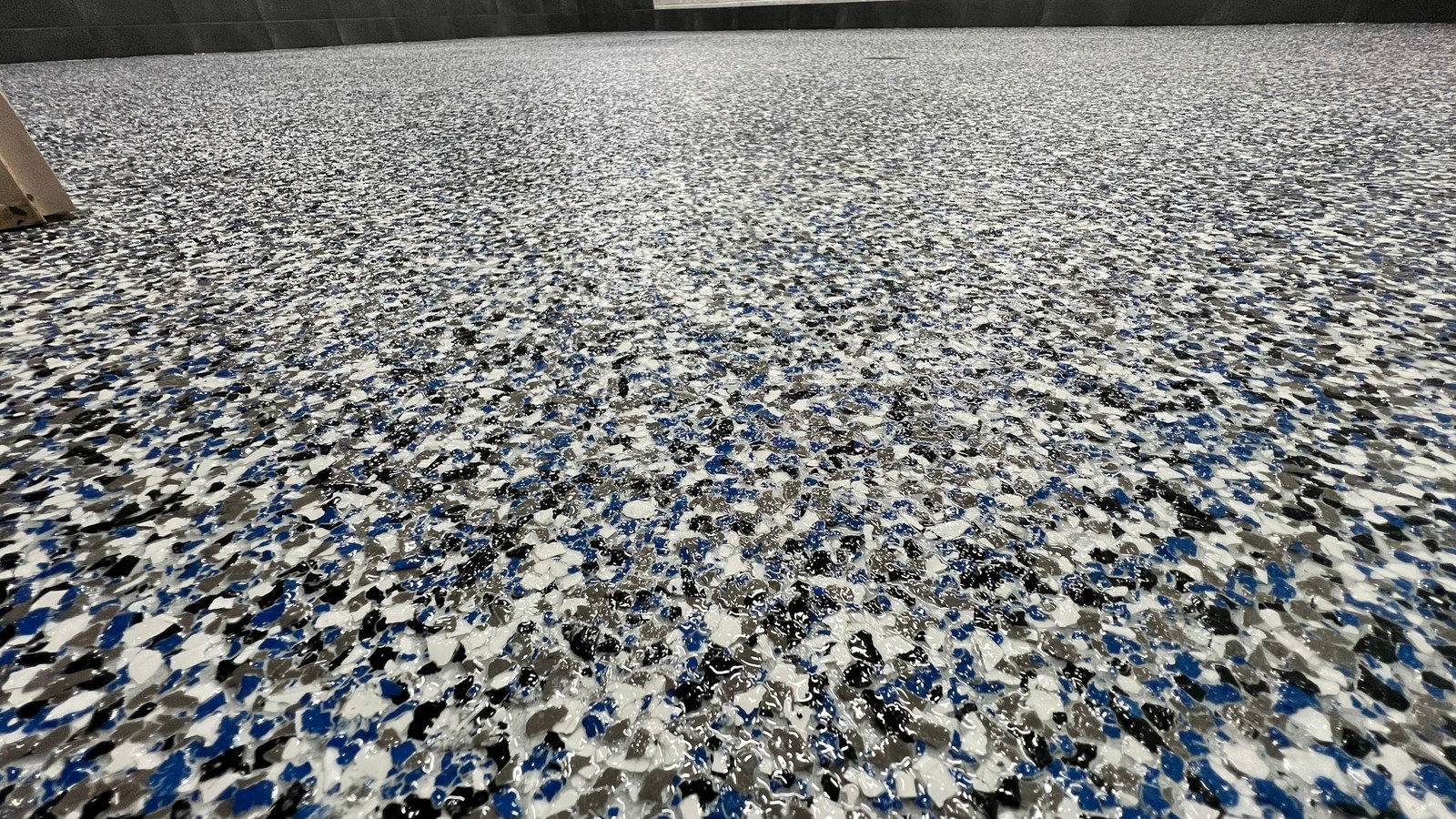
Is epoxy flake flooring slippery? It's one of the first questions we get from garage owners, cafe operators and anyone with a wet area to cover. The short answer is that it depends on how the floor is finished, not on the flakes themselves. A smooth, glossy coat with nothing added can get slick when wet. A flake floor with the right topcoat and a grip additive holds up far better than most people expect, and here's how to make sure yours does.
Straight out of the box, epoxy flake flooring is less slippery than plain single-colour epoxy. The flakes are broadcast into the wet base coat and sit slightly proud of the surface, which gives the floor a fine texture underfoot. That texture is where the grip comes from.
Is epoxy flake flooring slippery once water, soap or oil is on it? It can be, if the topcoat is a high-gloss clear with nothing added for traction. The coating on top matters more than the flake underneath it. Flake alone is not a slip-resistance system, and any installer who tells you it is has skipped a step.
Compared with other floors, a flake floor sits in the middle. Polished concrete and glossy tiles are usually slicker when wet. A plain roll-on epoxy with no grit is slicker again. So is epoxy flake flooring slippery compared with those? Usually less so, which is why flake is a common pick for garages and workshops. But the result depends entirely on the topcoat.
Three things control how a flake floor feels underfoot. The first is flake coverage. If you're new to this and wondering what is epoxy flake flooring, the flakes are small coloured chips scattered into wet resin and sealed under a topcoat. A full broadcast, where flakes are thrown until the base coat can't take any more, leaves a heavily textured surface. A light scatter leaves more bare resin and a smoother result.
The second is the topcoat. A topcoat seals the flakes in and gives the floor its sheen and chemical resistance. Gloss is not automatically slippery, but a gloss topcoat with no additive, wet, with a film of soap or oil, is where most slip complaints begin.
The third is the anti-slip additive. This is a fine grit, usually an aluminium oxide or polymer aggregate, mixed into or broadcast over the topcoat. It's the single biggest change you can make to how an epoxy flake floor behaves when wet, and it adds very little to the cost of the job.
Where the floor sits changes what you should ask for. On the Sunshine Coast, humidity, afternoon storms and wet tyres coming into the garage are part of normal life, so we treat more of these floors as wet floors than people expect.
Garages. Wet tyres, oil drips and tracked-in water make a garage slipperier than it looks. A full flake broadcast with an anti-slip topcoat is a good fit and still cleans easily.
Pool surrounds, showers and outdoor areas. These need the most grip, and the additive should be treated as essential. Bare feet and standing water are a poor combination with a smooth finish.
Cafes, gyms and shopfronts. Wet mopping, spills and customers in all kinds of footwear mean slip resistance can matter for safety and insurance. Australian Standard AS 4586 classifies slip resistance for pedestrian surfaces, and some sites need a floor that meets a particular classification. If that applies to you, say so when you ask for a quote so the system is specified to suit.
It's also worth asking about the finish for outdoor or semi-outdoor spots like patios, carports and pool decks. Sun, rain and leaf litter all change how a surface behaves, and a finish chosen for an indoor garage may not suit them. A good installer will ask where the floor sits before recommending a topcoat.
Even a well-specified floor can lose grip if it's looked after badly. Wax, oily cleaning products and built-up grease fill the surface texture and make it slick. A neutral cleaner and a soft broom or mop is usually all it needs. Degrease oil spots when they happen, rather than letting tyres grind them in. If the topcoat wears over many years, it can be recoated with fresh grip added, rather than replacing the floor.
Not if it's specified properly. Flake gives a textured base, the topcoat sets the sheen, and an anti-slip additive covers wet conditions. Is epoxy flake flooring slippery in a dry garage with a standard topcoat? Rarely. In a wet Sunshine Coast outdoor area with no additive? It could be. Matching the finish to the space is the whole job.
Before you agree to a flake floor, ask what topcoat is going on, whether an anti-slip additive is included, how heavy the flake coverage will be, and whether the area will be regularly wet. A good installer will answer all four without hesitating. If you're still working out what the system involves, our guide to what is epoxy flake flooring covers how the layers go down.
At Epoxy Flooring Projects, we install flake floors across the Sunshine Coast and Brisbane using our FastFlake system and a polyaspartic topcoat, so most floors are ready to walk on in as little as two hours. Every floor carries a lifetime adhesion warranty. Most jobs can be quoted from a few clear photos, and we'll only arrange a visit first if something looks out of the ordinary. Moisture is always tested on site the day we start. See our epoxy flake flooring page for flake colours, or call 0494 370 406 for a free quote.