
What is epoxy flake flooring, how is it installed, and where does it work best? A plain-English guide for Brisbane homes and businesses.
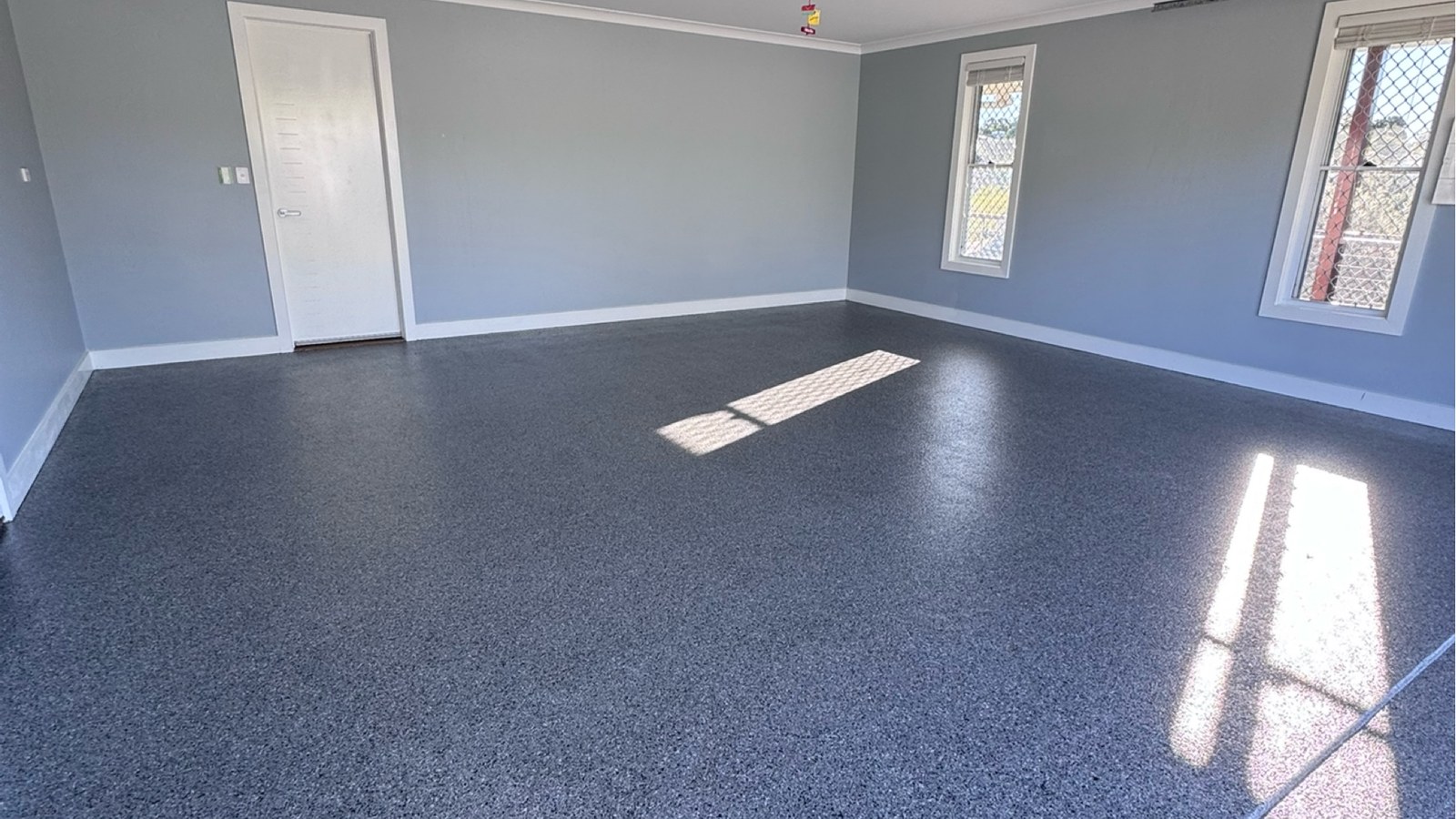
What is epoxy flake flooring? In short, it's a concrete floor coating where coloured flakes are scattered into wet epoxy, then sealed under a clear topcoat. The result is a speckled, terrazzo-style surface that hides marks, cleans easily and holds up to garage and commercial use. If you've seen a patterned garage or shop floor in Brisbane and wondered how it's done, this is how.
An epoxy flake floor has four parts. The concrete is ground back first so the coating can bond to it. A base coat of epoxy resin goes down next. While it's still wet, small coloured flakes (usually vinyl chips) are broadcast over it by hand. After it sets, loose flake is swept off and a clear topcoat seals the lot in.
The flakes do two jobs. They give the floor its colour and pattern, and they add texture that hides dust, tyre marks and small imperfections in the concrete underneath. That's why flake is often the first suggestion for an older, stained or patchy slab.
Traditional epoxy flake floors take several days because each coat has to cure before the next goes on. We use our FastFlake system with polyaspartic coatings, which cure much faster, so a typical garage is finished in one visit and is ready to walk on in as little as two hours after the topcoat.
Prep is what decides how long the floor lasts. The slab is diamond ground to remove old coatings and open the concrete, cracks and joints are repaired, and moisture is tested on site on the day the work starts. Skipping any of this is how coatings end up peeling a couple of years later.
So what is epoxy flake flooring in practical terms? It's a durable, decorative coating system rather than a single product, and the installer's prep, flake choice and topcoat do most of the work. Two floors that both count as flake can perform very differently.
Flake comes in three main ranges. The standard range includes Midnight, Tuxedo and Smoke, which are popular for garages and workshops. The Stone Look range takes its cues from geology, with Blue Granite, Turquoise, Claystone and Limestone. The classic range suits warmer spaces, with colours like Blue Mountain, Redstone and Outback Ochre.
Flake size and coverage also change the look. A fuller broadcast gives a dense, textured finish. A lighter one shows more of the base colour.
Partial flake, where the flakes are scattered lightly and the base coat shows through, can actually cost more than a full broadcast. A visible base coat has to be UV stable so it doesn't yellow or fade in the sun, and UV stable base coats cost more than the standard base used under a full flake, where the base is covered completely. You also tend to use more of that base coat. If you're after the lighter look, budget for it.
If you want to see colours in person, our epoxy flake flooring page has examples.
Garages are the most common use, followed by workshops, showrooms, shopfronts, laundries, pool surrounds and warehouse floors. Anywhere the concrete is stained, worn or just plain boring is a candidate. Flake is less common in places that need a very high-end, one-off look, which is where metallic systems come in. Our guide to what metallic epoxy flooring is explains how the two compare.
Against plain single-colour epoxy, flake hides more and offers more texture, but costs a little more. Against quartz, flake is lighter and generally cheaper, while quartz is heavier duty and often used where there's constant traffic. Against metallic epoxy, flake is a practical, patterned look, while metallic is a one-off, swirling finish that takes more skill and budget. Put simply, what is epoxy flake flooring best at? Hiding wear while staying easy to clean. Against bare concrete, the difference is obvious. A coated floor is sealed, so spills don't soak in and dust stays down.
Lifespan is covered in more detail in our guide on how long epoxy floors last. The short version is that a well-prepped flake floor in a garage can run for many years, and every EFP installation carries a lifetime adhesion warranty.
What is epoxy flake flooring good at? Mostly durability and looks. The advantages are real. Flake is durable, hides imperfections, is easy to clean and, with a full broadcast, costs less than most decorative systems. Because the surface is one continuous coat, there are no grout lines for dirt to settle into.
The trade-offs are worth knowing too. The texture that hides marks can catch fine dirt, so it takes a bit more scrubbing than a smooth floor. Cracks that keep moving can reflect through any coating, so they need proper repair first. And grip depends on the topcoat, so wet areas need an anti-slip additive. We've written about that in detail in is epoxy flake flooring slippery.
If you're still weighing it up, the question we hear most is whether flake is hard to look after. It isn't. A broom and a damp mop does most of it. Is epoxy flake flooring slippery? Only if it's finished badly, and we cover the fix in the guide above.
Epoxy Flooring Projects has been laying floors across South East Queensland for over 35 years, and every installation carries a lifetime adhesion warranty. Most jobs can be quoted from a few clear photos of the slab, and we'll only arrange a visit first if something looks out of the ordinary. Send photos through our website or call 0494 370 406 for a free quote.